


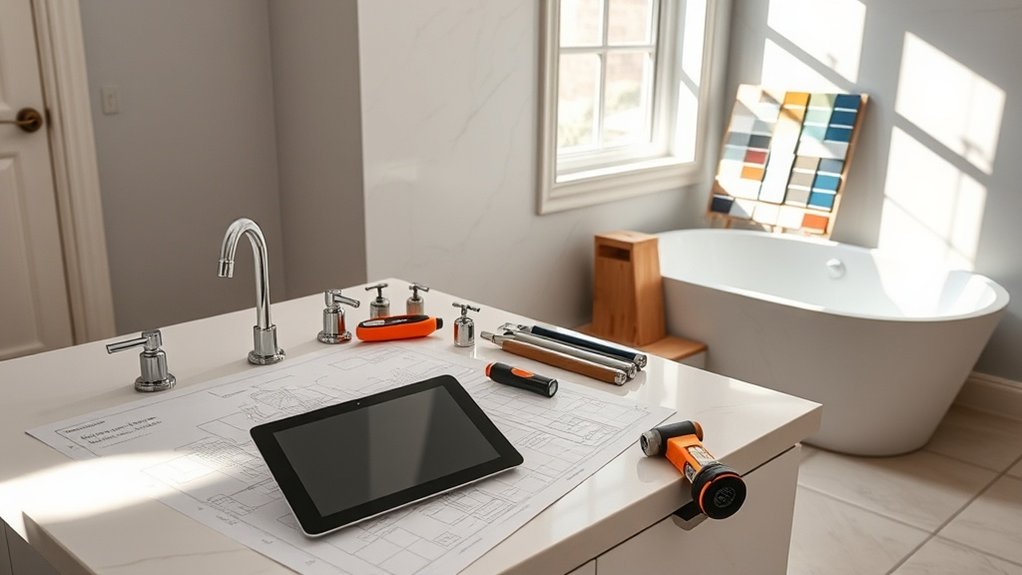
Planning a Bathroom Installation in Kent: A Step-by-Step Guide
When planning a bathroom installation in Kent, start by setting a realistic budget, estimating costs for materials, labor, and permits, plus a contingency fund. Next, choose durable and slip-resistant materials, like porcelain tiles. Design your layout to optimize space and enhance functionality, considering traffic flow. Hire qualified local contractors with good reviews, and guarantee compliance with local permits and building regulations. Each step is essential for a successful installation; keep exploring for more valuable insights.
Key insights
- Begin with a detailed budget that includes materials, labor, permits, and a contingency fund of 10-20% for unexpected costs.
- Choose durable, slip-resistant materials like porcelain or ceramic tiles, and consider water-efficient fixtures for sustainability.
- Design a functional layout by assessing space size, optimizing storage solutions, and ensuring smooth traffic flow throughout the bathroom.
- Research and hire qualified local contractors, ensuring they have proper licensing, insurance, and positive reviews from previous clients.
- Familiarize yourself with local regulations, zoning laws, and necessary permits to ensure compliance and avoid potential fines during installation.
Setting a Realistic Budget
When you're planning a bathroom installation, it's crucial to set a realistic budget to guarantee the project stays on track and within financial limits. Start by conducting a thorough cost estimation, factoring in materials, labor, and any necessary permits. Don’t forget to include a contingency fund for unexpected expenses, which can arise from unforeseen plumbing issues or structural repairs. Aim for a buffer of at least 10-20% of your total budget to accommodate these surprises. By anticipating potential costs, you’re more likely to avoid financial strain and maintain control over your project. Remember, a well-planned budget not only facilitates smoother execution but also enhances the overall success of your bathroom installation.
Choosing the Right Materials
With your budget in place, the next step is selecting the right materials for your bathroom installation. Start with tile selection; consider durability, slip resistance, and maintenance. Porcelain and ceramic tiles are popular for their resilience and ease of cleaning. Choose a size and pattern that complements your space, keeping in mind the visual flow.
Next, evaluate fixture options, including faucets, sinks, and toilets. Look for water-efficient models that balance functionality with style. Materials like stainless steel or chrome offer modern aesthetics, while traditional fixtures in brass or bronze can add classic charm. Verify that your selected materials align with your overall design vision and maintain a cohesive look throughout your bathroom. Quality materials will enhance both durability and appearance.
Designing Your Ideal Layout
To create a functional and aesthetically pleasing bathroom, you'll want to carefully consider your layout. Start by exploring various layout styles, such as the traditional, modern, or compact designs that best suit your needs. Assess the size and shape of your space to determine the most efficient arrangement for fixtures like the toilet, sink, and shower or bathtub. Prioritize space optimization; you might want to incorporate built-in storage solutions to maximize utility without compromising on style. Consider traffic flow to guarantee that movement within the space feels natural and unobstructed. By focusing on these elements, you can design a bathroom layout that enhances both functionality and visual appeal, ultimately creating a serene retreat that meets your daily needs.
Hiring Local Contractors
After finalizing your bathroom layout, the next step involves hiring local contractors who can bring your vision to life. It’s essential to evaluate contractor qualifications and gather insights from local reviews to guarantee you select the right professional for the job. Here are key factors to take into account:
- Experience: Look for contractors with a proven track record in bathroom installations.
- Licensing: Verify they're licensed and insured to protect your investment.
- References: Request references from previous clients to gauge satisfaction.
- Estimates: Obtain detailed estimates to compare pricing and scope of work.
Navigating Permits and Regulations
How do you navigate the maze of permits and regulations when planning your bathroom installation? Start by understanding zoning laws in your area; these dictate what can be done on your property. Check with your local council to guarantee compliance with specific requirements. Next, focus on researching building codes that apply to bathroom installations. These codes cover plumbing, electrical work, and safety standards, making sure your project meets legal requirements. Depending on the complexity of your installation, you may need to apply for permits, which can involve submitting plans and paying fees. Remember, failing to comply can result in fines or having to redo work, so thorough preparation is essential for a smooth installation process.
Frequently Asked Questions
How Long Does a Typical Bathroom Installation Take?
A typical bathroom installation takes about one to two weeks, but bathroom timelines can vary considerably based on several installation factors. These include the complexity of the design, the quality of materials chosen, and the need for plumbing or electrical updates. If you’re planning a remodel, make sure you consider these aspects, as they can extend the project duration. Proper planning helps you manage expectations and achieve a smoother installation process.
Can I Install a Bathroom Myself?
Yes, you can install a bathroom yourself, but there are several DIY considerations to keep in mind. You’ll need to assess your plumbing and electrical skills, as well as local building codes. Prepare a list of tool requirements, including wrenches, saws, and tile cutters. Make sure you’re comfortable with each task, from framing to finishing. If you're unsure, consulting a professional can save you time and prevent costly mistakes.
What Are Common Bathroom Installation Mistakes to Avoid?
To avoid common bathroom installation mistakes, pay close attention to plumbing errors and design oversights. Make certain your plumbing connections are secure and leak-free; double-check your measurements before cutting materials. Don't overlook ventilation needs, as inadequate airflow can lead to mold. Also, consider the layout carefully; a poorly designed space can hinder functionality. Finally, always adhere to local building codes to prevent costly adjustments later on.
How Do I Handle Unexpected Issues During Installation?
When facing unexpected issues during installation, stay calm and assess the situation. Identify the cause of the delay and determine its impact on your timeline. You may need to make budget adjustments to accommodate additional expenses. Communicate with your contractor to explore solutions and alternatives. Prioritize essential tasks to maintain progress. Document any changes to keep track of your project, ensuring you stay on schedule and within budget.
What’s the Best Way to Maintain My New Bathroom?
To maintain your new bathroom effectively, focus on regular cleaning and moisture control. Use non-abrasive cleaners to avoid damaging surfaces, and wipe down fixtures frequently to prevent buildup. Guarantee proper ventilation to minimize humidity; consider using an exhaust fan. Invest in mildew-resistant products for added protection. Regularly check for leaks and repair them promptly to maintain the integrity of your bathroom. Following these cleaning tips will keep your space looking fresh and functional.
Summary
By following this step-by-step guide for your bathroom installation in Kent, you’re setting yourself up for a successful project. You’ve established a realistic budget, chosen quality materials, designed a functional layout, and selected skilled local contractors. Don’t forget to navigate through the necessary permits and regulations to guarantee compliance. With careful planning and execution, your dream bathroom is within reach, enhancing both your home’s value and your daily living experience.
